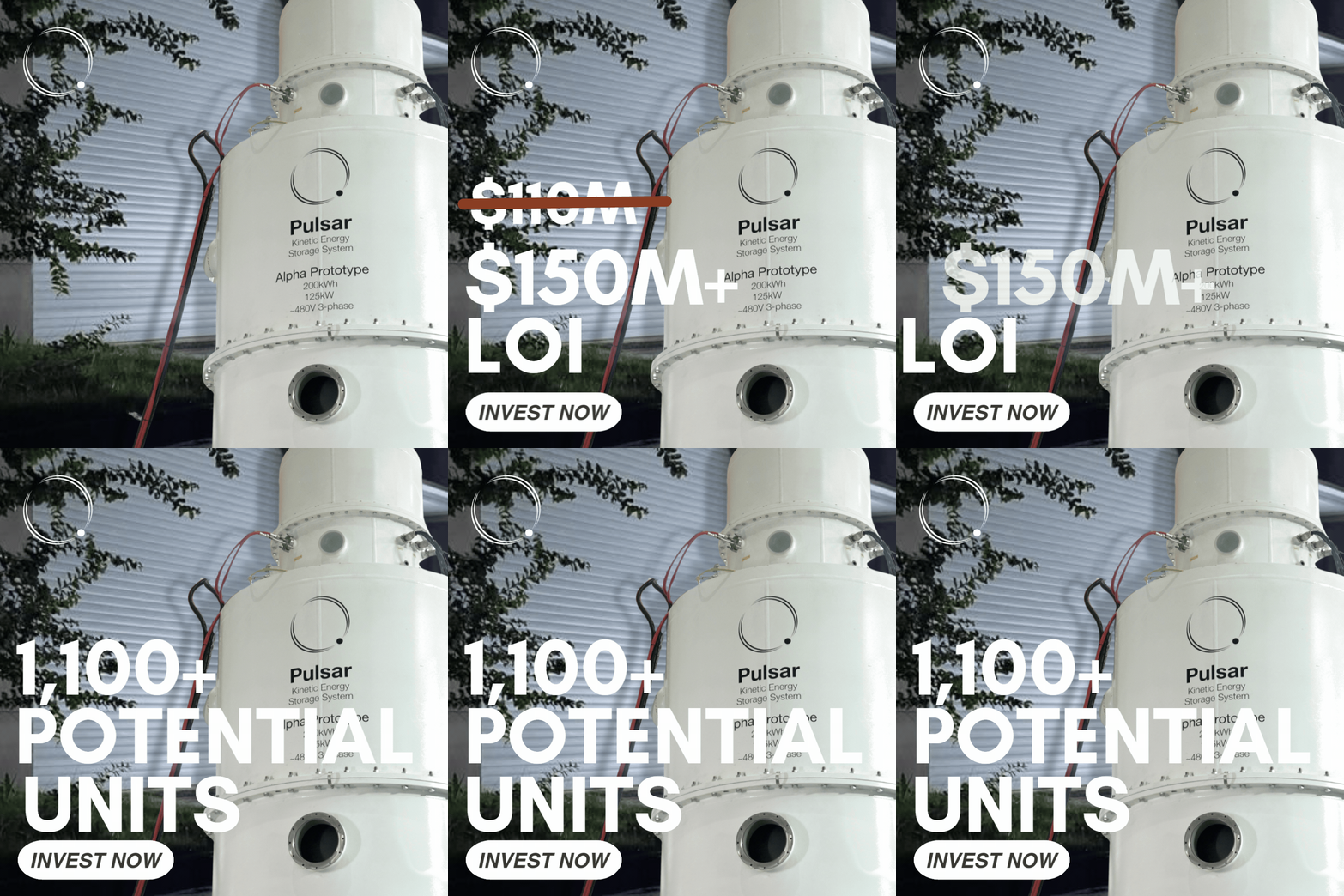
Qnetic: More Than $150 Million in Potential Customer Business Through Signed LOIs
Nine prospective customers. More than 1,100 potential units. Over 0.5 GWh of potential energy storage capacity.
Qnetic’s commercial pipeline has grown as prospective customers explore its flywheel-based approach to grid-scale energy storage.
The company has secured signed letters of intent (LOIs) representing more than $150 million in potential customer business. The pipeline spans nine customers and includes more than 1,100 potential units, representing over 0.5 GWh of potential energy storage capacity and 288 MW of combined power capacity.
These figures represent prospective demand, not recognized revenue or completed product orders. LOIs indicate commercial interest and potential future business, while actual deployments depend on subsequent agreements, project development, financing, technical validation, and other conditions.
Nevertheless, the scale of this pipeline provides an important signal of the market opportunities Qnetic is pursuing.
Why customers are exploring alternative storage technologies
Electricity demand is growing, while power grids face increasing pressure to balance variable renewable generation, changing consumption patterns, and new large-scale loads.
Energy storage can help address these challenges by shifting energy across time and providing power when it is needed.
Qnetic is developing a mechanical energy storage system based on a high-speed flywheel rotor. Its design aims to offer long service life and frequent cycling without relying on lithium-ion battery chemistry.
For prospective customers, the relevant questions extend beyond the technology itself: How will the system perform in a real installation? What will it cost over its operating life? How reliably can it deliver power? And can it be manufactured and deployed at the required scale?
These are the questions that further testing, pilot projects, and commercial development must help answer.
From commercial interest to real-world projects
Qnetic’s LOI pipeline is one part of its broader commercialization effort. The company is advancing its full-size Pulsar prototype through testing while preparing for pilot deployments and developing its production capabilities.
Converting prospective demand into delivered systems will require continued technical progress, customer commitments, manufacturing readiness, and sufficient capital.
The opportunity is significant, but execution will determine the outcome. Qnetic’s next phase is focused on moving from customer interest and prototype development toward validated performance and commercial deployment.
If you’ve been considering investing, don’t wait until the round is closed.
This is your opportunity to review the offering and participate before this investment window ends.