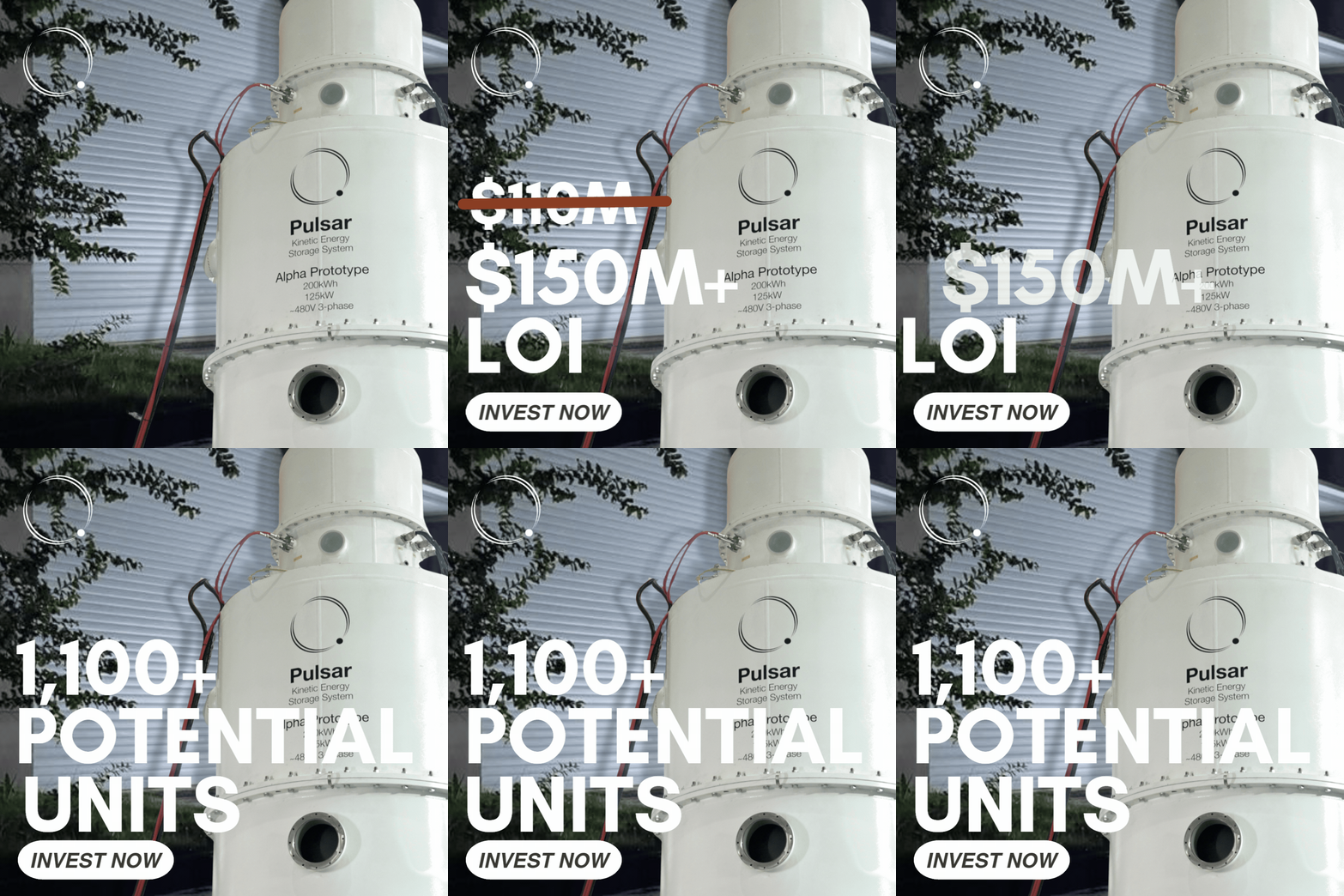
Qnetic’s Pulsar Prototype Completes Its First 100 Operating Cycles
A key milestone in testing Qnetic’s flywheel energy storage technology.
Qnetic’s full-size Pulsar prototype has completed its first 100 autonomous charge-discharge cycles, marking an important step in validating the system’s operating sequence and control architecture.

During this testing phase, Pulsar repeatedly charged and discharged under computer control, completing 100 cycles without faults. The system also demonstrated automated operation and safety shutdown functionality.
For grid-scale energy storage, reliability is fundamental. A system must do more than store energy; it must repeatedly charge and discharge in a controlled, predictable manner. These early results provide valuable evidence as Qnetic advances from component-level validation toward more demanding system testing.
From initial cycling to higher-speed validation
The first 100 cycles were completed using a steel setup rotor at low rotational speeds and reduced power and energy levels. This stage focused on validating the operating sequence and control systems, rather than demonstrating full rated performance.
The next phase is to progressively increase rotational speed and operating power, with further testing planned using the carbon-fiber rotor as Qnetic advances toward full-speed validation.
Each phase is designed to build on the previous one, allowing the team to evaluate system behavior and address engineering challenges before moving to more demanding operating conditions.
Why this milestone matters
Qnetic is developing a mechanical approach to long-duration energy storage using a high-speed flywheel rotor. Unlike electrochemical batteries, the system stores energy mechanically, with the potential to support repeated cycling over a long service life.
Completing the first 100 autonomous cycles is an early but meaningful step in demonstrating that the full-size system can execute its core operating sequence under computer control.
The work ahead remains substantial. Continued testing will be essential to validate performance, reliability, and operation at higher speeds and power levels.
Follow Qnetic’s technology development as Pulsar progresses through the next stages of testing.
If you’ve been following Qnetic’s progress, now is the time to see where the technology stands and what comes next.