Grid Scale Battery Storage: What It Is and Why It Matters
A clear way to evaluate technology, duration, and cost

- Do utility-scale batteries already operate on real grids?
- What problems does grid storage solve for renewables?
- Which technology dominates today’s grid battery projects?
- How does a flywheel differ from chemical batteries?
- What are the biggest safety and degradation tradeoffs?
- Grid-scale battery storage is a utility-connected way to time-shift electricity and support capacity when generation is variable.
- The value of storage depends on lifetime delivered energy, not only on nameplate ratings and installed cost.
- Lithium-ion is widely used in stationary storage today, alongside pumped hydro, flow batteries, and mechanical storage options.
- Levelized Cost of Storage (LCOS) is a practical metric because it reflects cycling limits, losses, and degradation over an asset’s life.
- Installed cost benchmarks for battery energy storage are about $125 to $334 per kWh, with NREL’s 2025 benchmark at the upper end of that range.
- Introduction: Why Grid Storage Is Becoming a Planning Constraint
- What Is Grid-Scale Battery Storage?
- How Does Grid Battery Storage Work?
- Which Batteries and Technologies Are Used for Grid Storage?
- What Is the Current Cost of Grid-Scale Battery Storage?
- Benefits and Limitations of Large-Scale Energy Storage
- Qnetic Experience in Independent Grid Storage Validation
- How Qnetic Addresses Multi-Hour Storage Gaps
- Conclusion: A Practical Way to Compare Storage Options
Introduction: Why Grid Storage Is Becoming a Planning Constraint
If you’re planning a grid with growing wind and solar, you need a way to shift electricity in time and keep supply aligned with demand. Storage can absorb surplus generation and later deliver it when the grid is tight.
The term “grid storage” covers both batteries and mechanical systems, but most projects are evaluated on the same basics: power rating, energy capacity, duration, and lifetime behavior.
- Time-shifting: Store energy off-peak and discharge during peaks
- Capacity support: Help cover demand when generation is variable
- Two ratings: Compare power and energy, not only one number
- Lifetime behavior: Plan for losses, downtime, and aging effects
What Is Grid-Scale Battery Storage?
Grid-scale battery storage usually means a utility-connected battery energy storage plant, sized for multi-hour time-shifting or capacity support. National Lab of the Rockies (formerly NREL) describes these systems as providing energy time-shifting and capacity support for power systems with variable generation resources. Most utility-scale projects are front-of-meter storage and interconnect at distribution or transmission level. Behind-the-meter storage sits on a customer site and primarily supports on-site loads.
Projects are rated in two numbers: power in megawatts (MW) and energy in megawatt-hours (MWh). That distinction matters because a high-MW system can still be short on usable duration if its MWh is small.
- Connection level: Transmission or distribution; front-of-meter or behind-the-meter
- Power vs. energy: MW controls output; MWh controls duration
- Core use cases: Time-shifting, capacity support, and grid services
- System scope: Includes inverters, controls, and protection hardware
Grid storage projects are rated in MW and MWh. MW is maximum power output; MWh is total delivered energy. Duration equals MWh divided by MW—for example, 400 MWh / 100 MW = 4 hours.
How Does Grid Battery Storage Work?
Most battery and flywheel storage plants follow the same basic loop, even if the underlying design differs. The operational goal is dispatch on demand while also responding fast enough to support reliability and grid services. Batteries store energy in chemistry, flywheels store it in rotation, and pumped hydropower stores it as elevation (potential energy).
-
Absorb surplus power
Charge when supply exceeds demand -
Convert and store
Store energy in chemistry or rotation -
Hold safely
Manage heat, pressure, or rotor stability -
Dispatch on peak
Export power when prices and demand rise -
Provide grid services
Support frequency and voltage within milliseconds inverter-based
What makes projects diverge is what happens over years: limits on cycling, losses, and degradation can reduce delivered MWh and reshape economics. That is why planners separate nameplate ratings from lifetime throughput. Response speed also differs: pumped hydropower is typically seconds to minutes, while inverter-based batteries and flywheels can act within milliseconds.
Which Batteries and Technologies Are Used for Grid Storage?
Lithium-ion batteries are the dominant choice for stationary projects today. National Lab of the Rockies (formerly NREL) notes that lithium-ion is already widely used in stationary storage, while researchers continue to evaluate novel battery materials and next-generation technologies for grid storage.
| Criteria | Lithium-Ion (Lithium Iron Phosphate, LFP) | Flow Batteries | Pumped Storage Hydropower | Flywheel (Generic) | Qnetic Flywheel System |
|---|---|---|---|---|---|
| Typical discharge profile | Multi-hour, commonly 1 to 4 hours | Multi-hour, often longer duration designs | Hours to days, site-dependent | Often seconds to minutes | Designed for 3 hours at full power, 10+ hours derated |
| Round-trip efficiency | Often around 90% in many designs | Often lower than lithium-ion | Varies by site and design | Varies by design | Designed for roughly 80 to 88% |
| Lifetime behavior | Capacity fade starts on Day 1, so projects are overbuilt | Chemistry differs; durability depends on design | Long civil asset life, complex siting | Containment and wear depend on design | Designed for 30-year asset life with no capacity fade by design |
| Safety considerations | Thermal runaway risk must be managed | Generally lower fire risk than lithium-ion | Civil and water-system safety concerns | Mechanical containment is critical | Designed for underground installation concept and no thermal runaway |
| Siting constraints | Flexible, but permitting can be complex | Flexible, but footprint can grow with duration | Strong geography dependence | Flexible, modular layouts | Designed for modular arrays and grid siting flexibility |
Use the table directly above to compare duration and lifetime behavior on consistent terms. A generic flywheel is often built for short-burst discharge (seconds to minutes), and published cycle counts may refer to repeated short pulses rather than multi-hour shifting. By contrast, Qnetic is developing a flywheel system designed for multi-hour discharge, so its targets describe a different operating regime.
What Is the Current Cost of Grid-Scale Battery Storage?
When you ask about “current cost,” it helps to separate capital expenditure (the upfront purchase and installation cost) from Levelized Cost of Storage (LCOS), a lifetime cost per delivered MWh. Those two measures can move in different directions depending on duration, losses, cycling assumptions, and degradation.
- Installed scope: Battery equipment is often a large share; site work can be significant
- Balance of plant: Inverters, transformers, and controls can be major cost drivers
- Losses and efficiency: Round-trip losses reduce delivered MWh
- Cycling assumptions: Revenue and LCOS depend on usable daily cycling
- Lifetime effects: Degradation and augmentation can change the lifetime math
Installed cost benchmarks for battery energy storage are about $125 to $334 per kWh, with NREL’s 2025 benchmark at the upper end of that range. In general, longer-duration systems can show a lower $/kWh because the same power-conversion and interconnection equipment is spread across more MWh of energy capacity. Qnetic publishes LCOS modeling as a projection rather than a measured result. An independent 2030 analysis by Imperial College Consultants and Storage Lab places Qnetic at $101 per MWh in the energy-arbitrage application studied.
Benefits and Limitations of Large-Scale Energy Storage
Large-scale energy storage can increase renewable utilization and reduce stress on transmission and peaker plants, but it still faces duration limits and siting constraints. The right choice depends on duration needs, safety constraints, and how performance changes with age.
- Renewable integration: Shift wind and solar output to higher-value hours
- Capacity support: Reduce risk during tight supply conditions
- Grid services: Provide fast response for stability needs
- Permitting effort: Safety, noise, and siting rules can drive timelines
- Degradation exposure: Some batteries lose capacity and may need augmentation
- Site constraints: Geography can limit mechanical storage like pumped hydro
For multi-hour applications, technology tradeoffs show up in permitting, maintenance, and lifetime energy throughput. A project that looks cheap up front can be expensive if it requires mid-life replacement or frequent augmentation.
Qnetic Experience in Independent Grid Storage Validation
Before committing to a multi-decade storage asset, utilities and investors often ask for independent validation. Qnetic points to joining the Electric Power Research Institute (EPRI) technology assessment program, with validation scheduled to begin in 2027, plus planned pilots with the Sacramento Municipal Utility District (SMUD) and Arevon as evidence-building steps.
Independent validation and utility pilots
- STARTING POINT
- Utilities need independent, standards-based validation before committing to multi-decade storage assets. For new mechanical storage, datasheets alone rarely overcome risk concerns about lifetime performance and safety in real grid operation.
- APPROACH
- Qnetic has joined the Electric Power Research Institute (EPRI) technology assessment program, sponsored by the Sacramento Municipal Utility District (SMUD), with validation scheduled to begin in 2027. EPRI is set to evaluate the system for eight leading utilities and developers representing more than 40,000 MW of future demand.
- RESULT
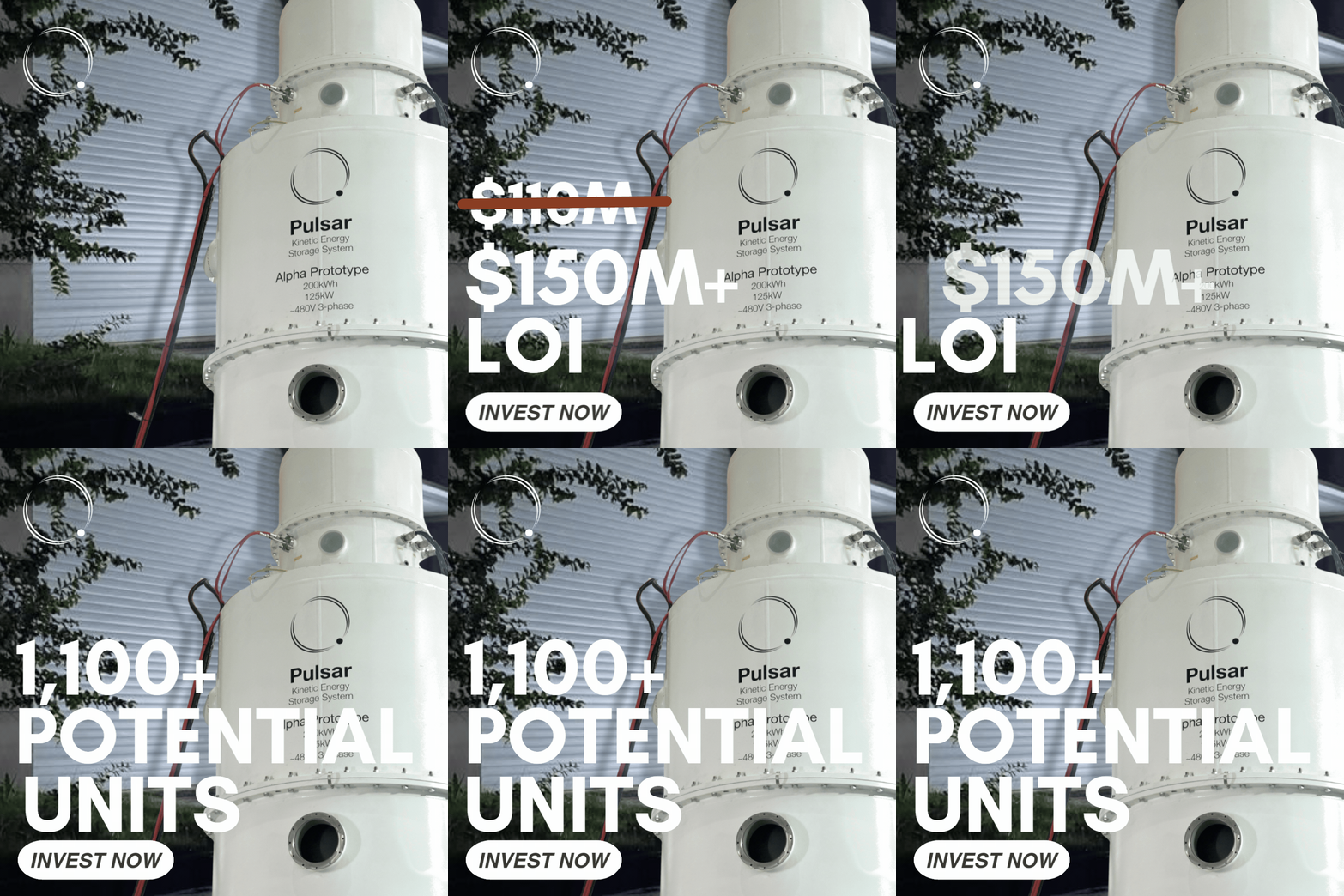
- Scheduled next steps include beta units on SMUD’s grid in early 2027 and AI-grade duty-cycle testing with Arevon from mid-2027 at the National Lab of the Rockies. Qnetic also reports non-binding letters of intent (LOI).
How Qnetic Addresses Multi-Hour Storage Gaps
Lithium-ion storage can look strong on nameplate metrics, but planning still comes down to lifetime delivered energy: lithium-ion LFP systems begin degrading on Day 1, typically about 3 to 5% annually, so projects must be significantly overbuilt at commissioning, and useful life under normal duty is 7 to 10 years, with many OEMs limiting grid operation to one cycle per day. Qnetic is developing a flywheel-based mechanical battery designed for multi-hour discharge without capacity fade by design.
- Multi-hour discharge: Designed for 3 hours at full power, 10+ hours derated
- Round-trip efficiency: Designed for roughly 80 to 88%
- Idle holding time: Design target of more than 15 days idle holding time
- Cycle targets: Designed for 22,000+ cycles over 30 years
- Materials profile: Designed with no lithium and no cobalt
- Fast response: Q500 is designed to respond in milliseconds
Because LCOS is driven by delivered MWh over decades, Qnetic frames the Q500 platform as a multi-hour design target: 500 kWh at 125 kW, intended to support cycling more than once a day without degradation-driven replacement. Later roadmap units, including a 1 MWh class product, follow the Q500 rather than preceding it.
Conclusion: A Practical Way to Compare Storage Options
Grid-scale battery storage is best evaluated by matching the grid problem to duration and lifetime behavior, then using metrics like LCOS to compare technologies on delivered energy. When you compare short-burst systems, 1 to 4 hour batteries, and longer-duration options, capacity degradation and cycling limits can shift LCOS more than installed cost.
FAQ
Do utility-scale batteries already operate on real grids?
Yes. One well-known example is Hornsdale Power Reserve in South Australia (150 MW / 193.5 MWh). Operators run these systems to shift energy and support capacity under real grid conditions.
How does grid battery storage work?
A storage plant charges when electricity is plentiful, converts energy into a stored form, then discharges through inverters when demand rises. Controls also deliver fast grid services such as frequency support.
Which technology dominates today’s grid battery projects?
Lithium-ion dominates most new stationary battery deployments because it is mass-produced and proven at scale. National Lab of the Rockies (formerly NREL) notes it is already widely used in stationary storage as researchers evaluate next-generation technologies.
What is the current cost of grid-scale battery storage?
Installed benchmarks for battery energy storage are about $125 to $334 per kWh, with NREL’s 2025 benchmark at the upper end of that range. LCOS can differ because it depends on duration, efficiency, cycling assumptions, and lifetime performance.
How does a flywheel differ from chemical batteries?
A flywheel stores energy mechanically as rotational motion rather than in electrochemistry. Qnetic’s design uses a carbon fiber rotor, magnetic bearings, and a vacuum chamber to target multi-hour storage without capacity fade.
What are the biggest safety and degradation tradeoffs?
Lithium-ion systems can face thermal runaway risk and typically degrade over time, which affects delivered energy and replacement planning. Mechanical storage avoids battery chemistry but must be engineered for containment and reliable long-life operation.